




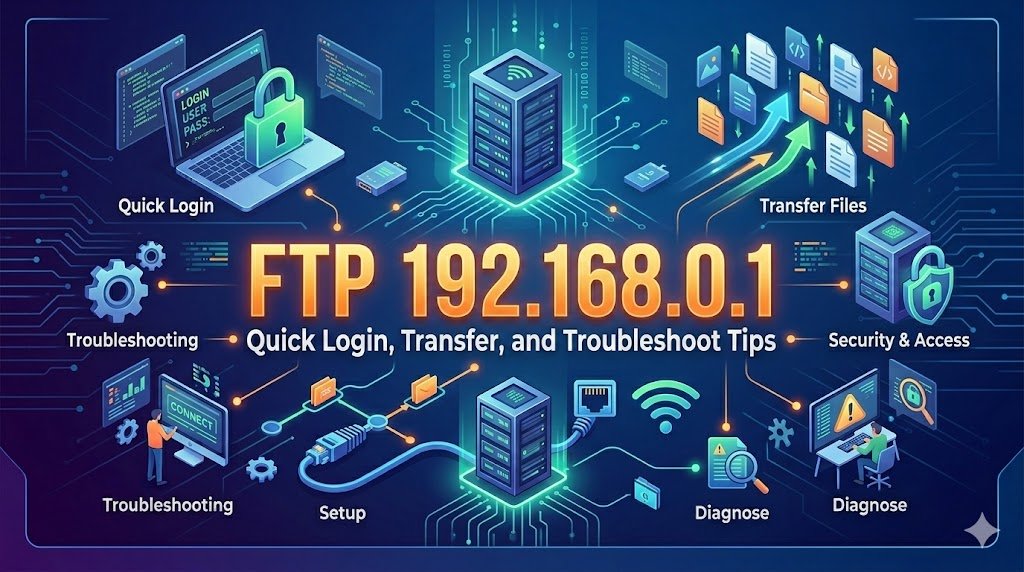
FTP (File Transfer Protocol) is one of the most reliable methods for transferring files between devices in a local area network (LAN). FTP 192.168.0.1 is commonly used for routers, NAS devices, and local servers, allowing users to upload, download, and manage files efficiently. Proper configuration, file management, and security practices are essential for a smooth FTP experience.
This guide covers how to transfer files, manage your FTP server, and secure access on 192.168.0.1, along with troubleshooting common issues.
What Is FTP 192.168.0.1?
192.168.0.1 is a private IP address often assigned to routers, NAS devices, or local servers. Using FTP with this IP allows devices on the same LAN to share and manage files securely.
Key Facts:
-
Private IP, accessible only within LAN unless VPN or port forwarding is used
-
Requires authentication with a username and password
-
Supports secure file transfer when using FTPS or SFTP
How to Access FTP 192.168.0.1
Step 1: Connect to Your Network
Ensure your computer is connected to the same LAN as the FTP server.
Step 2: Use an FTP Client
Popular clients include FileZilla, WinSCP, and Cyberduck:
-
Host:
192.168.0.1 -
Port:
21for FTP or22for SFTP -
Username and password: As configured on your server
Step 3: Login and Test Connection
-
Use the Quickconnect feature in the FTP client or command line:
-
Verify successful login and access to server directories
Transferring Files
-
Uploading Files
-
Drag files from your local computer to the FTP server directory
-
Organize files into folders for easy management
-
Downloading Files
-
Select files from the server and save them locally
-
Maintain proper directory structure to avoid confusion
-
Batch Transfers
-
Use FTP clients’ queue feature to transfer multiple files efficiently
Managing Your FTP Server
-
User Accounts: Create separate accounts with read/write permissions
-
Directory Permissions: Control which folders each user can access
-
Monitoring: Track file transfers and user activity logs
-
Backup: Regularly backup server directories to prevent data loss
Security Tips for FTP 192.168.0.1
-
Use FTPS or SFTP for encrypted transfers
-
Change default usernames and passwords immediately
-
Limit FTP access to trusted LAN devices
-
Enable firewall rules to restrict unauthorized access
-
Keep firmware and software updated
-
Regularly review logs for suspicious activity
Common FTP Issues and Fixes
-
Cannot Connect
-
Check FTP server status
-
Verify username/password and IP address
-
Ensure firewall and antivirus are not blocking connections
-
Slow Transfers
-
Reduce simultaneous connections in the client
-
Check LAN speed and router bandwidth
-
Permission Denied
-
Confirm user account permissions and folder access
-
Check server-side read/write settings
-
Timeout Errors
-
Increase timeout in FTP client settings
-
Ensure stable LAN connection
-
Port Blocking
-
Make sure FTP port (21 or custom) is open in firewall/router
Benefits of Using FTP on 192.168.0.1
-
Centralized file storage on local network
-
Secure and fast file transfer between devices
-
Efficient user management and access control
-
Simplified backup and retrieval process
FAQs About FTP 192.168.0.1
Can I access FTP 192.168.0.1 from the internet?
Only via VPN or port forwarding. Otherwise, it is limited to the local network.
Why can’t I login to FTP 192.168.0.1?
Incorrect credentials, firewall blocking, inactive FTP service, or port issues are common causes.
Is FTP 192.168.0.1 secure?
Standard FTP is unencrypted. For secure transfers, use FTPS or SFTP.
What is the default FTP port?
Port 21 for FTP and port 22 for SFTP.
How do I reset FTP credentials?
Access the router or server admin panel and update the FTP username/password.
Conclusion
Using FTP 192.168.0.1 allows seamless file transfer, efficient management, and secure storage within a local network. By following best practices for login, file management, and security, you can ensure reliable and safe operations for your local servers or NAS devices.
Disclaimer
This guide is for informational purposes only. FTP configurations, ports, and server settings may vary depending on your hardware. Always follow security best practices when accessing FTP servers.