




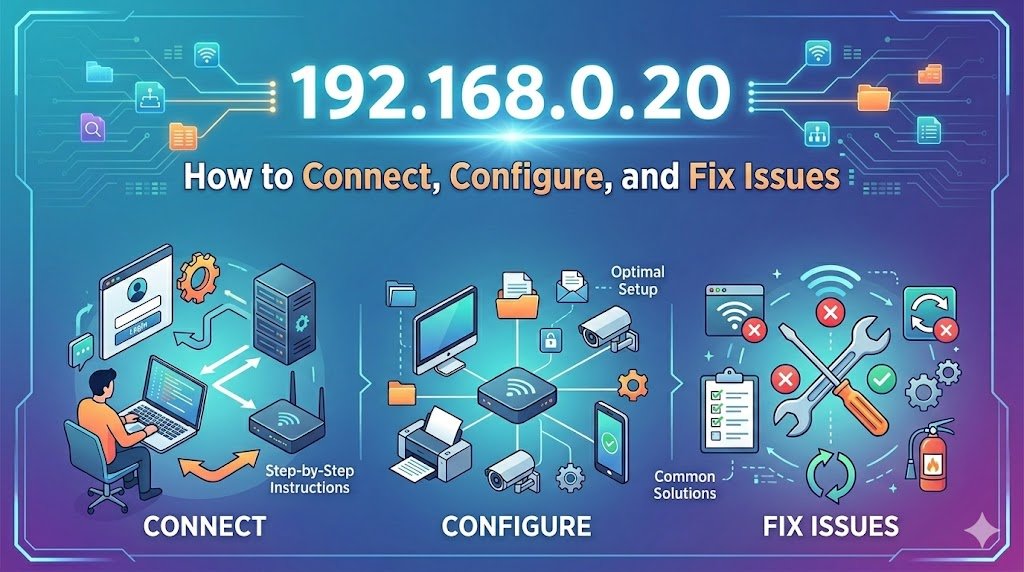
Private IP addresses are used to manage devices within a local area network (LAN). 192.168.0..20 is a common IP for routers, access points, servers, and other networked devices. Understanding how to login, configure, and troubleshoot this IP ensures smooth network performance and security.
This guide explains step-by-step how to access 192.168.0.20, configure network settings, and fix common issues.
Understanding 192.168.0..20
The IP 192.168.0.20 is part of the private IPv4 range 192.168.0.0 – 192.168.255.255, which is reserved for internal networks. Devices using this IP can communicate within a LAN but are not directly accessible from the public internet.
Key Facts:
-
Used for routers, servers, NAS, printers, and IoT devices
-
Can be assigned manually (static IP) or automatically via DHCP
-
Identifies devices uniquely on a network
How to Login to 192.168.0..20
Step 1: Connect to the Same Network
Ensure your device is connected to the same LAN, either via Ethernet or Wi-Fi.
Step 2: Open a Web Browser
Enter the IP in your browser’s address bar:
Step 3: Enter Credentials
-
Default username and password are often printed on the router or device manual
-
Common defaults:
admin/adminoradmin/password -
Change credentials immediately to secure your network
Step 4: Access Device Settings
Once logged in, you can configure LAN/WAN, wireless settings, firewall rules, and connected devices.
Configuring 192.168.0..20
-
LAN Setup
-
Assign static IPs for critical devices
-
Subnet mask:
255.255.255.0 -
Default gateway: Router’s main IP (e.g.,
192.168.0.1)
-
Wi-Fi Setup
-
Set SSID and password
-
Enable WPA2/WPA3 encryption
-
Limit guest network access
-
DNS Settings
-
Use ISP-provided or public DNS (Google 8.8.8.8, Cloudflare 1.1.1.1)
-
DHCP Reservation
-
Reserve 192.168.0.20 for important devices to prevent conflicts
Common Fixes for 192.168.0..20
-
Cannot Access IP
-
Ensure the device is powered and on the same subnet
-
Check cables and Wi-Fi connection
-
Login Issues
-
Reset router if credentials are lost
-
Make sure Caps Lock is off and credentials are typed correctly
-
IP Conflicts
-
Verify no other device uses the same IP
-
Use DHCP reservation for consistency
-
Wi-Fi Problems
-
Reboot router
-
Check SSID and password
-
Adjust Wi-Fi channels if interference occurs
-
Service Not Running
-
Ensure the web interface, SSH, or RDP is active on the device
Security Tips
-
Change default login credentials
-
Keep firmware updated
-
Enable router firewall
-
Limit remote management
-
Use strong passwords and 2FA if available
-
Regularly monitor connected devices
Benefits of Proper IP Management
-
Reliable LAN access
-
Better network performance and stability
-
Enhanced security for routers and servers
-
Easier troubleshooting of network devices
FAQs About 192.168.0..20
Can I access 192.168.0.20 from the internet?
No, it’s a private IP. Remote access requires VPN or port forwarding.
Why can’t I login to 192.168.0.20?
The device may be offline, firewall may block access, or IP conflicts may exist.
Is 192.168.0.20 safe?
Yes, private IPs are safe within a secured network.
How do I check if 192.168.0.20 is active?
Use ping 192.168.0.20 or scan your LAN using network tools.
Can I change the default IP address?
Yes, routers allow custom private IP assignment for LAN devices.
Conclusion
192.168.0..20 is a versatile private IP for routers, servers, and other network devices. Proper login, configuration, and troubleshooting help maintain a secure and reliable LAN. Following best security practices ensures that devices remain safe from unauthorized access.
Disclaimer
This guide is for educational purposes. IP addresses, router configurations, and network settings may vary depending on device models and firmware. Always follow best practices for network security.